Blog Tag Archives: fair use
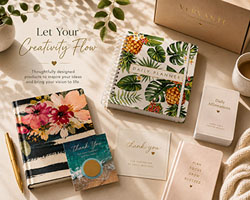
Part 2: How to Create a New Product with Vervante: Quotes and Content
(Part 2 of our "How to Create a Product From Start to Finish 5-part series) How to Create a Product with Vervante: Part 2 In the second installment of this special series of articles, we will guide you through the next steps once you’ve defined the product you want to create. How to get printing cost quotes Once you've defined exactly what you want to create, you can reach out to our team to find out what it will cost to print it. We provide free quotes, all you need to know when requesting a quote are general specifications. Here are a few examples: Books: Size of book, number of pages, cover type, binding method Card decks or greeting cards: Size of cards, number of cards, packaging Planners or journals: Number of pages, page size, tabs, covers, binding, etc. To request a quote, go to the Vervante website and click on “Get a Quote” in the top right-hand corner. Fill out the required information and you will receive an email response with the quote information. Create a Vervante author account To upload files and order products, you need to create a Vervante author account. It’s free, quick, and easy. Just go to our website and click on Sign Up. Once you’re set up, you can access your Author Dashboard, which is where you can upload files for printing, place orders, and access everything from sales reports to invoice details and everything else you need to manage your account. Writing and creating content No matter what kind of product you are creating - books, planners, card decks, children's books, coloring books, etc. - it's guaranteed that you will need some amount of written content for that product. Content is just as important as design when it comes to creating a product that is both attractive and functional. Here are a few of our tips to give you a head start as you create content for your product: Writing productivity tips: Facing a blank page can be hard, but we've put together a few articles that can help you get into the zone, including: "How to overcome writing obstacles," a fun guide to zombie-proofing your book or product, and our National Novel Writing Month writing productivity guide. The importance of copy editing: Nothing can be more damaging to your products and your reputation than publishing a book or other written product that is filled with typos, errors, and incorrect information. A few mistakes here and there aren't that big of a deal, but consistent misspellings, grammar errors, and incorrect information will distract your reader and leave them with a negative perception of you, your expertise, and the message or information you share. Check out this article to learn more about the different types of editing and how important it is for the success of your product: "The Importance of Copy Editing." Understanding legal issues: Understanding how to protect your unique work and the rules you need to follow is an essential part of being an author and entrepreneur. We've published several resources and multiple blog articles about the most common issues, answering many FAQs that our customers send our way. We've included links below to articles and free guides you can access that will give you a good working knowledge of the do's and don'ts as you create your new product. What to put on your book copyright page: The copyright page is found at the front of the book, usually right after the title page. The format can be varied as there is no single accepted template for copyright pages. Generally, they will contain things like: copyright notice, ISBN, publisher information, contact information, rights and permissions, country book is printed in, author website, credits and disclaimers. Follow the link to this story, "What to Put on Your Copyright Page," and you'll see lots of examples you can use for inspiration. FREE RESOURCES Our Help Page offers a variety of free resources including product videos and guides on everything from design tips to copyrighting. Below are links to just a few of the many guides available: How to Use ISBN, LCCN, and Copyright "Can I Use That Quote?" What Authors Need to Know About Fair Use & Permissions Copyright Permissions and Fair Use How to Write a Children's Book Word Count Conversion Chart Custom-Designed Card Decks How to Create Your Own Coloring Books 7 Steps to Create the Perfect Planner In this section of our special 5-part series, we hope we shared information that has inspired and motivated you to move forward with your idea for a book or special product. Next week, we will cover what you need to know about designing your product, with insider tips to help you through the process. Links to Full Series Article #1: Getting Started Article #2: Creating Your New Product (this article) Article #3: Design and Print Files Article #4: Publishing & Printing Article #5: How to Share & Sell
Read More →
Free ebooks and resources for authors
We know how important it is for authors to have access to resources and guides that they trust. That's why we're excited to share with you the new Expert Guide Resource Library on our website. Think of this as your own personal publishing library, filled with a wide range of FREE ebooks to inspire, educate and support your journey creating, sharing and selling books and other printed products with Vervante. There are currently 24 ebooks in the library with plans for more coming soon. Here's a few highlights of our most popular ebooks: Bleed and Crop Marks Guide: What you need to know when formatting print files Word Count Conversion: How many words does it take to make a book? Copyright Permissions & Fair Use guide: Answers to one of the most common issues all authors face How to Create Audiobooks: When you want to give your book a voice. How to Self-Publish: The complete guide for authors & entrepreneurs Helpful Hints for Retail Distribution: Understanding the sales and fulfillment process From Retail Sales to Royalties: How authors get paid Book Publishing Checklist: Keeping you on track from the first draft to the finish line. How to Create Custom Card Decks: One of the hottest products in publishing today. And so many more... We hope you bookmark this page and come back to visit often as we're constantly adding new ebooks to provide the support and resources our authors and clients need. For questions, free quotes, or more information please email or schedule a phone call with one of our publishing pros via the Contact Us page.
Read More →
Can I quote someone in my book? (What authors need to know about fair use and permissions)
“Can I use song lyrics in my book without getting permission?” “What about quoting someone? Is that allowed?” This and other fair use/permission issues are frequent questions we hear from authors wondering what the legalities are for using things like quotes, poems, lyrics, song titles, scriptures, and more in the books and products they are creating. These are good questions and something every writer should have a basic familiarity with. Whenever you want to directly quote, excerpt, or reproduce someone else’s work in something you are writing, you should consider whether or not you need legal permission to protect yourself and your business from potential future problems. Some of the things you may want to quote or reuse will fall under the “Fair Use” umbrella, which means you don’t need permission as long as the way you’re using it does not impede on the owner’s rights. Other things, however, are legally protected by copyright and should only be used after acquiring permission. Q: Can I quote a celebrity or influential person like Oprah or Richard Branson in my book? A: This is one of the most common questions we get. The answer depends on how you are using the quote. A quote used within a book, article or social media post to support the topic in a positive or neutral way is usually OK. Creating something that entirely depends on quotes from other people is NOT OK. Here’s an example: DON’T NEED PERMISSION If you use a few brief quotes by Steve Jobs, Richard Branson and Tony Robbins in a book discussing entrepreneurship, that would fall under fair use. If you are creating a planner or journal that contains quotes as a small part of the product, but it is filled with a lot of other information created by you such as instructions, motivations, education, art, etc., you are probably safe as well. **But be sure to provide attribution – it’s just the right thing to do. More about that below. NEED PERMISSION However, if you write a book of quotes, or create a deck of cards or other merchandise that contains nothing but quotes from celebrities, influencers or other famous people, that would NOT fall under fair use and you DO need permission. The following is a quick roundup of common issues we get asked about and whether they need permission or not. Please note that this is not a full list and we are not copyright lawyers, so it’s best to do further research if you are unsure. This article by attorney Howard Zaharoff in Writer’s Digest magazine called “A Writers’ Guide to Fair Use” is a good resource. Another good one is How to Legally Use Quotations. You can also check out The Library of Congress online search engine for copyrighted works at the Copyright Office website. You DO need permission to use: Song lyrics or poems (even partial ones). Songwriters are very protective of their rights—and permissions can be very expensive and difficult to obtain. There are a couple of exceptions, though: If you’re quoting a song from before 1923 you don’t need permission. All works before then are in the public domain. Hymns that are in the public domain fall under fair use. Not ALL hymns are free to use, though, so be sure to check. If you’re writing song lyrics as part of a scholarly work or a critical review, you may have permission under fair use. Art or photography that is copyrighted. Best practice is to use photos or images that are public domain, licensed creative commons, stock images, or belong to you. Quotes from famous people if they are used as a book title or as a majority of the book contents. Quotes from "new" versions of the Bible published after 1923 (see section below) You DON’T need permission: To use quotes from famous people as long as they are used in a brief and positive or neutral way to support your independent work - and with proper attribution. To quote or reference the title or author of a work such as books, poems, movies, TV shows or songs. To link to something online from your website, blog, book or other publication. To quote books or other works published before 1923 For news stories or scientific studies. Shorter quotes, references and paraphrasing is usually ok without permission. Copying large amounts of a story or study, however, may require permission from the writer or publisher. Most sites have a policies/procedures page that will note their preferences. Recipes (although this falls into a bit of a gray area – for more info read this article by attorney Sara F. Hawkins.) To quote scriptures from Bibles published before 1923 (see section below). Quoting from the Bible Any work published prior to 1923 is in the public domain and falls under fair use. This includes older translations of the Bible including: King James Version Revised Standard Version (but not the NRSV) Duoay-Rheims Young’s Literal Darby JPS Bible (but not the New JPS nor the Jerusalem Bible) However, “newer” versions of the Bible have some pretty strict copyright guidelines and should be researched. Here are a few examples: NIV: https://www.biblegateway.com/versions/New-International-Version-NIV-Bible/#copy ESV (English Standard Version): https://www.crossway.org/permissions/ GNT (Good News Translation): https://www.biblesociety.org.uk/copyright-and-permissions/ All Thomas Nelson Bible translations: New King James Version (NKJV), New Century Version (NCV), International Children’s Bible (ICB), Expanded Bible, or The Voice: https://www.harpercollinschristian.com/sales-and-rights/permissions/ As you can see, permissions vary from translation to translation. For example the ESV allows for the use of 1,000 verses without permission as long as those verses are not a complete book of the Bible or the entire text of the book you are creating. But the NIV allows for only 500 verses. If you plan on quoting from the Bible in your next published work, be sure to research the copyright and permissions guidelines for the specific version you are using. Best practice: Attribution A good rule of thumb, no matter what, is to always include proper attribution when quoting or paraphrasing someone else’s work within your own. Acknowledge the original source of the material, who and where it came from, links to websites if applicable, and your reason for using it. When in doubt When it comes to fair use and permissions, most experts agree: When in doubt, leave it out. Want song lyrics? Make some up that fit what you’re writing. Need an inspirational quote? We’re sure you can think of a great one – and now you’re the quotable person and people will want to quote you in the future! The books and products you’re creating are full of your creativity, passion and ideas. And that’s what people want to hear the most. ** Please note, this article is for informational purposes only and is not to be considered legal advice.
Read More →